

[Wheat Killer with Pesticide Sensor]
“The Food Is Delicious” in Malaysia: Why My “Food-Related Stress” Disappeared ✨
I’m a beautiful middle-aged woman living in Malaysia who’s a little off her rocker 💗
I’m surprisingly high-performing in some weird ways.
My sensitivity to “food” is truly off the charts (lol) 📈
I’m “hypersensitive” to everything—not just taste, but smell, sight, and even touch.
Back when I lived in Japan, that hypersensitivity was a reeeeeally big source of stress.
- 💧 The Era of “Food-Related Stress”
- ⚡️ The Terrifying “Wheat Killer” Switch 🌾
- 🇲🇾 Now in Malaysia: I can eat like it’s a dream! ✨
- 🇲🇾 The mystery of “Malaysian food”—where everything tastes great
- 🕌🌱 The Origin of Deliciousness: The Teachings of “Halal” and “Toiiba”
- 🌈 Conclusion: Let’s be grateful for life and keep smiling—even if it’s just a little
💧 The Era of “Food-Related Stress”
Back in Japan, I couldn’t eat “tomatoes,” “strawberries,” or “apples” at all.
It wasn’t the texture—it was the “taste” that was the problem.
Even when my family ate the same things and said, “Isn’t this delicious?”, to me, they tasted like an indescribable “bitterness” or “astringency”—or rather, a sharp, stinging “sourness.”
Just looking at lemons or umeboshi (pickled plums) would make my salivary glands ache so much I’d be in agony (lol).
(I can eat homemade shiso-pickled umeboshi, but store-bought ones are absolutely out of the question!)
On top of that…
- 🐔 “Chicken smells bad.”
- 🥬 “Vegetables taste bitter.”
- 🐖 “Pork makes me feel sick—I can’t even touch it with my bare hands.”
…and so on!
I tried all sorts of workarounds while cooking—cooking it thoroughly, wearing gloves 🧤, washing it with garlic, sake, potato starch, or baking soda—but since it’s a daily struggle, it’s “incredibly stressful.”
Plus, ever since I collapsed, I’ve been strictly managing my diet as part of a health-focused ASD meal plan, which made it even worse.
⚡️ The Terrifying “Wheat Killer” Switch 🌾
Out of all these things, the biggest source of stress for me in Japan was “wheat flour.”
I mean, regular people might not understand this, but “wheat flour” really doesn’t agree with me at all!
I’ll write about this on another blog, but for me:
👉 “wheat flour” = “the switch that flips me into rage mode” (lol) 💥
Living a “wheat-free life” in Japan is actually pretty tough 😅
When eating out, it’s pasta, udon, somen, or bread. Wheat-based foods are convenient and delicious, and they’re everywhere, right?
A-n-d. Even seasonings are “full of wheat.” 😱
Soy sauce, of course, but also instant seasonings, miso, sauces, sweet bean paste, chili bean paste, curry roux, consommé… Seriously, there’s no escaping it (lol).
That’s why I started making my own miso and soy sauce, and at the supermarket, I was that “pretty suspicious person” who just kept checking the ingredient lists on the back of everything 🧐
Man, what a stress (lol). Going completely wheat-free is basically the same as “making everything yourself.”
This is “Demon Stress” Part 2 when it comes to food.
💬 Husband: “Don’t go doing this on your own and piling up stress.”
🙋♀️ Me: “Which is better—this, or you losing your temper after eating wheat?”
💬 Husband: “…(Wheat-free) Good luck with that 😅”
Seriously, “stress mode” is way better for me and everyone around me than that unstoppable “rage mode” ( ´∀` )
🇲🇾 Now in Malaysia: I can eat like it’s a dream! ✨
So, as for what happened after I came to Malaysia…
I can eat anything now—“strawberries,” “tomatoes,” “apples,” “lemons”!
I’m totally fine touching raw meat with my bare hands, too.
And on top of that, believe it or not, I don’t get angry even when I eat a small amount of “wheat products”!
(But not if I eat a lot or if they’re deep-fried 😉)
More than anyone else, I was the most surprised by this change!
“So strawberries are actually delicious…”
It was a childlike moment of wonder (lol) 🥹
Seriously, even just take a chicken breast—whether you grill it or boil it, the meat is plump, and neither the skin nor the fat in between smells bad!
The broth isn’t greasy at all, and it actually tastes like “chicken soup!” (lol) 🍲
🇲🇾 The mystery of “Malaysian food”—where everything tastes great
Eating out in Malaysia often involves spicy or fried foods, and even if the ingredients look fresh, they frequently aren’t as fresh as they seem 💦
It’s quite a challenge for kid, so I basically cook at home every day 🍳, though we do order delivery occasionally.
And as for seasonings, it’s basically just:
🧂 “salt” • 🧂 “pepper” • 🧄 “garlic” • 🫚 “ginger” — that’s it!!
(There are plenty of Japanese products at the shopping malls, but for me—without a car 🚗❌—going to the mall is like climbing a mountain. No way! I’m surviving on salt I brought from Japan, miso I bought three months ago, and soy sauce I made myself.)
So, in a way, Malaysia is kind of inconvenient when it comes to cooking…
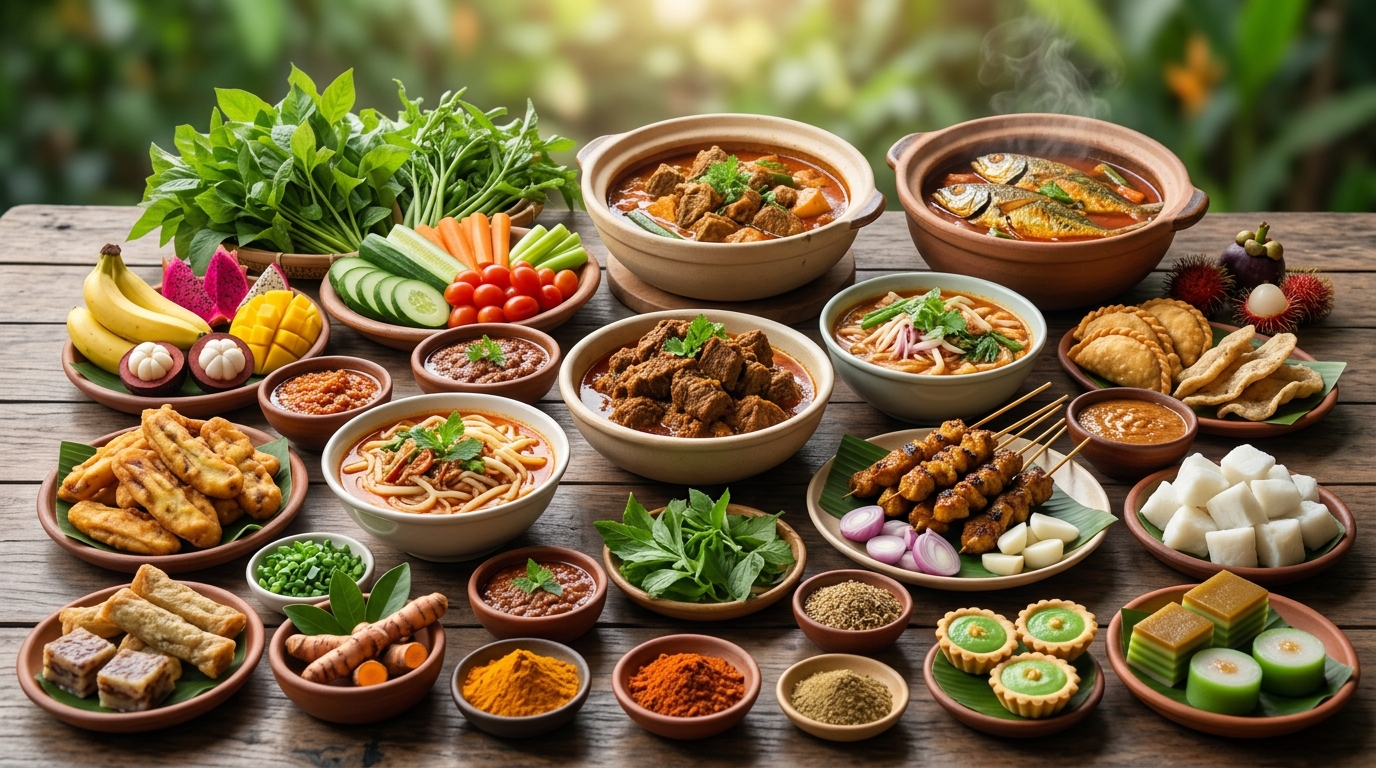
Buuuut! There’s this mystery where “whatever you make tastes good.” ✨
- Just boiled chicken ➡️ Delicious!
- Throw some veggies into that broth, add salt and pepper ➡️ Delicious!
- Just stir-fry mushrooms and vegetables with garlic ➡️ Delicious!
It’s so delicious that I’m genuinely surprised and ask myself:
👉 “Why is this so good?!” 😮
🕌🌱 The Origin of Deliciousness: The Teachings of “Halal” and “Toiiba”
GACKT once said, “Malaysia has a wide variety of multinational cuisines, and the standard of food is high,” but I think there’s something even more fundamental.
It’s that “the ingredients themselves” are delicious 🥬🍎
Looking back now, I wonder if what I—being so sensitive—used to feel in Japan was actually the effect of what’s commonly called “pesticides.”
Of course, pesticides are used in Malaysia too. It’s even said that in some areas, they use pretty harsh pesticides, and there was a time in the past when Malaysian produce was rejected by Singapore.
The current situation isn’t “perfect” either.
However, when it comes to Malaysian ingredients, there’s a nationwide effort—and a proven track record—to “reduce pesticide residues.” ✨
Surprisingly, the reason for this is that Malaysia is a country where Islam is the state religion 🕌
Under Islamic law, the concept of food isn’t just about not violating prohibitions (halal); it also requires that the food be:
🌟 “good for the body, safe, and of high quality (tayyibah)” 🌟
That’s right. There’s a strict rule:
🚫 “You must not consume anything that is bad for your body.”
That’s precisely why, when you buy halal food (like vegetables and fruits) at a halal-certified grocery store, it contains fewer pesticide residues.
Which means it’s “delicious”! 🎉
🌈 Conclusion: Let’s be grateful for life and keep smiling—even if it’s just a little
Of course, the food itself is delicious.
But we eat while being grateful for all life in nature 🌿
Perhaps that’s why we find it “delicious.” 💕
These days in Japan, it’s incredibly rare to see people clasp their hands together and say “Itadakimasu” 🙏 or “Gochisousama deshita” when eating out. You hardly ever see it.
Plants were living beings too, and since we’re receiving that life, we should be grateful ❤️
I truly believe that this compassion is also a form of compassion toward our own bodies 🌱
And the result of that is my way of life—
😂 Laughing every day
💃 Dancing the mambo on a Chocobo
🤝 Sharing laughs with locals
😊 Making the people right in front of me a little happier!
- ✨ Let’s take it easy—let’s just go with the flow 🌊
- ✨ Let’s keep it laid-back and keep smiling 😊
- ✨ Let’s try to find one good thing today! 🍀
Have a good day!! ☀️
No responses yet